
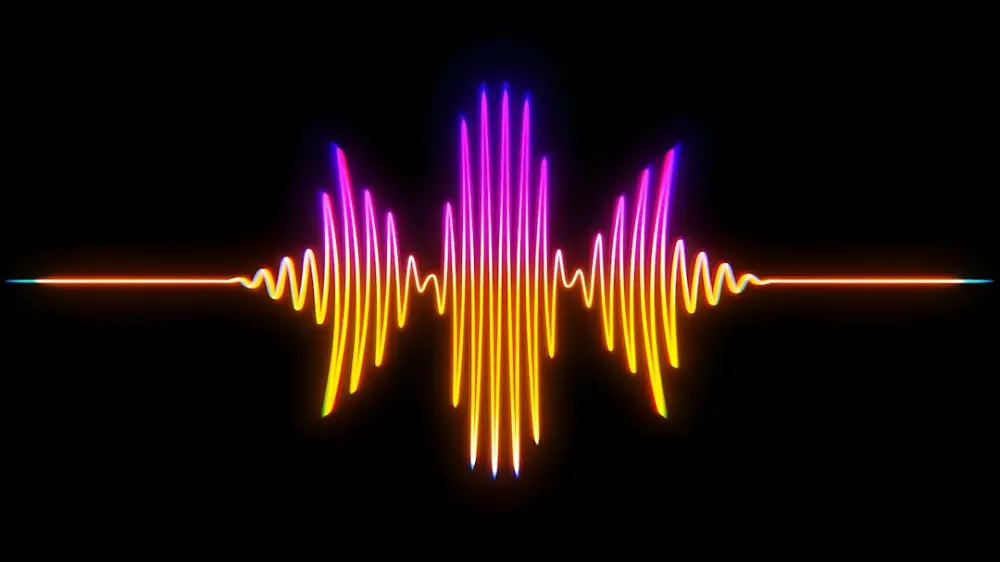
Recognizing tonal relationships involves identifying the perceived connections between different sound frequencies or musical pitches based on their mathematical and psychological proximity. These interactions, including consonance, dissonance, and octave equivalence, dictate how humans interpret harmony and melody within environmental soundscapes and acoustic compositions in 2026.
For those accustomed to interpreting visual gradients, sound offers a parallel complexity. Mastering these auditory relationships requires shifting focus from individual notes to the intervals between them. By training the ear to detect how frequencies interact, we can better understand the texture of a space, much like how stripping away color helps us finally see the structural integrity of a scene.
At the most fundamental level, pitch is the brain's interpretation of a sound wave's frequency. When we speak of tonal relationships, we are discussing how one frequency stands in relation to another. For example, a steady 440 Hz tone (Standard A) serves as a reference point. When a second tone is introduced, our brains do not just hear two separate sounds; they immediately begin to calculate the distance between them. This calculation forms the basis of all musical scales and harmonic structures used in both artistic performance and environmental analysis.
In a practical setting, such as a recording studio or a quiet natural park, identifying these basics starts with isolating the fundamental frequency. This is the lowest frequency of a periodic waveform. By recognizing the fundamental, you can begin to map out the overtones and harmonics that give a sound its specific character or timbre. This process is strikingly similar to identifying the primary light source in a photograph before assessing the secondary reflections and shadows.
Consonance vs Dissonance: Perceiving Tension
Consonance and dissonance are the primary tools of emotional and structural communication in sound. Consonance refers to intervals that are perceived as stable, pleasant, or "at rest." These typically occur when the ratio between two frequencies is a simple whole number, such as 2:1 or 3:2. Because the peaks and troughs of the sound waves align frequently, the ear perceives a sense of clarity and resolution.
Dissonance, by contrast, occurs when the frequency ratios are more complex, such as 16:15. These waves do not align neatly, creating a phenomenon known as "beating," where the sound seems to pulse or vibrate uncomfortably. While often labeled as "unpleasant," dissonance is essential for creating movement and tension. In an urban soundscape, the clashing tones of a construction site or the fluctuating hum of heavy traffic provide a high degree of dissonance that signals activity and urgency.
To practice recognizing these states, listen to a common household appliance, like a refrigerator compressor. It often produces a steady, consonant hum. If you then introduce a contrasting sound, like a whistling kettle, you can hear the transition into dissonance as the two frequencies begin to fight for dominance in the acoustic space. Learning to identify the exact moment when stability turns into tension is a key skill for anyone analyzing environmental audio.
Frequency Distance and Mathematical Pitch Gaps
The distance between pitches is not measured linearly but logarithmically. This means that as we move higher in pitch, the actual number of Hertz (cycles per second) between notes increases, even if the perceived distance remains the same. For instance, the gap between 100 Hz and 200 Hz sounds the same to our ears as the gap between 1000 Hz and 2000 Hz, even though the second gap is ten times larger in terms of raw frequency.
In music theory, these gaps are often categorized into semitones and cents. A semitone is the smallest interval commonly used in Western music, while a cent is one-hundredth of a semitone. For technical acoustic engineering in 2026, using high-resolution spectrum analyzers allows for the visualization of these mathematical gaps. These tools show how ambient light affects mood and depth in a visual sense, just as frequency gaps define the "space" and "air" within a recording.
Consider the sound of a distant siren. As it moves toward and away from you (the Doppler effect), the frequency shifts. By understanding the mathematical gaps between the intended pitch and the shifted pitch, you can calculate the speed of the object. This practical application of tonal relationships demonstrates that these concepts are not merely theoretical; they are functional data points in our daily interaction with the world.
Octave Equivalence and Recurring Identity
Octave equivalence is the phenomenon where two notes that are an octave apart are perceived as having the same "chroma" or identity, despite being at different pitch levels. This occurs because the higher frequency is exactly double the lower frequency (a 2:1 ratio). This relationship is so strong that most humans naturally categorize these sounds as the same note, just in a different register.
This recurring identity is what allows a melody to be recognizable whether it is sung by a deep bass voice or a high soprano. In environmental monitoring, octave equivalence helps in identifying recurring mechanical signatures. If a piece of industrial machinery emits a vibration at 60 Hz, it will often produce harmonic resonances at 120 Hz, 240 Hz, and 480 Hz. Recognizing these as part of the same "tonal family" allows a technician to identify the source of a sound even in a noisy factory environment.
To develop a sense of octave equivalence, try humming a low note and then immediately jumping to what feels like the same note at a higher pitch. Most people will instinctively hit the octave. This internal sense of pitch identity is a biological shortcut that helps us organize the vast range of frequencies we encounter daily into manageable patterns.
Practical Methods for Identifying Tonal Patterns
Developing a professional-grade ear for tonal relationships requires consistent practice and the right methodology. One of the most effective techniques is interval training. This involves learning to identify the specific distance between two notes played in sequence. For example, the first two notes of "Someplace Over the Rainbow" represent a perfect octave, while the first two notes of the "Star Wars" theme represent a perfect fifth.
Another practical method is the use of reference tones. By memorizing the sound of a few key frequencies, you can use them as a mental yardstick to measure other sounds. Many professionals use a 1 kHz tone as their primary reference. In a field environment, you might use the steady drone of a power line (usually 60 Hz in North America) to calibrate your sense of pitch.
- Active Listening: Spend ten minutes in a busy environment, such as a cafe, and try to isolate the three most prominent pitches you hear.
- Transcription: Attempt to hum or write down the intervals of a simple bird song or a digital notification sound.
- Visual Mapping: Use a real-time FFT (Fast Fourier Transform) analyzer on a mobile device to see the visual representation of the sounds you are hearing. This helps bridge the gap between auditory perception and mathematical reality.
By combining these exercises, you move from passive hearing to active interpretation. You begin to notice how a room’s acoustics can amplify certain tonal relationships while dampening others, much like how a camera lens can compress or expand the perceived distance between objects in a frame.
Where to Begin with Tonal Training
- Start by isolating a single, constant frequency in your immediate environment, such as the hum of a computer fan or a ventilation system, to serve as your tonal baseline.
- The first step in active recognition is to hum that base frequency and then attempt to match its octave at a higher pitch to internalize the 2:1 mathematical ratio.
- To begin distinguishing harmonic tension, introduce a second variable sound—like a whistling kettle—and focus on the physical "beating" sensation that occurs during dissonance.
- Next, use a mobile spectrum analyzer to visually map these frequencies, allowing you to see how intervals appear as consistent gaps on a frequency scale.
- Finally, apply these skills in a natural setting to observe how the ambient light affects mood and depth of the landscape in tandem with its acoustic character.
Tonal Relationships in Environmental Sound Monitoring
In the context of modern environmental observation, tonal relationships provide a wealth of data about the health and activity of a specific location. In 2026, we use these relationships to distinguish between natural biophony—the sounds of living organisms—and anthropophony, the sounds produced by human activity. Natural environments tend to have a more distributed and consonant tonal structure, whereas industrial environments are often characterized by rigid, dissonant, and repetitive frequency patterns.
Observing these shifts in tone allows for a deeper understanding of how an environment changes over time. For instance, the tonal relationship between the wind moving through different types of foliage can indicate the density and health of a forest. A dry, brittle forest produces higher-frequency, more dissonant "clacks," while a lush, hydrated forest produces lower-frequency, softer "wooshes." These subtle shifts are the auditory equivalent of changing light quality throughout the day.
At Ambee App, we believe that the ability to see and hear these nuances is fundamental to capturing the true essence of a moment. Whether you are adjusting your camera for the perfect ambient exposure or analyzing the harmonic tension of a city street, recognizing tonal relationships is about understanding the underlying structure of our surroundings. By focusing on how different elements interact—be they frequencies of light or frequencies of sound—we gain a more precise and meaningful interpretation of the world around us.